
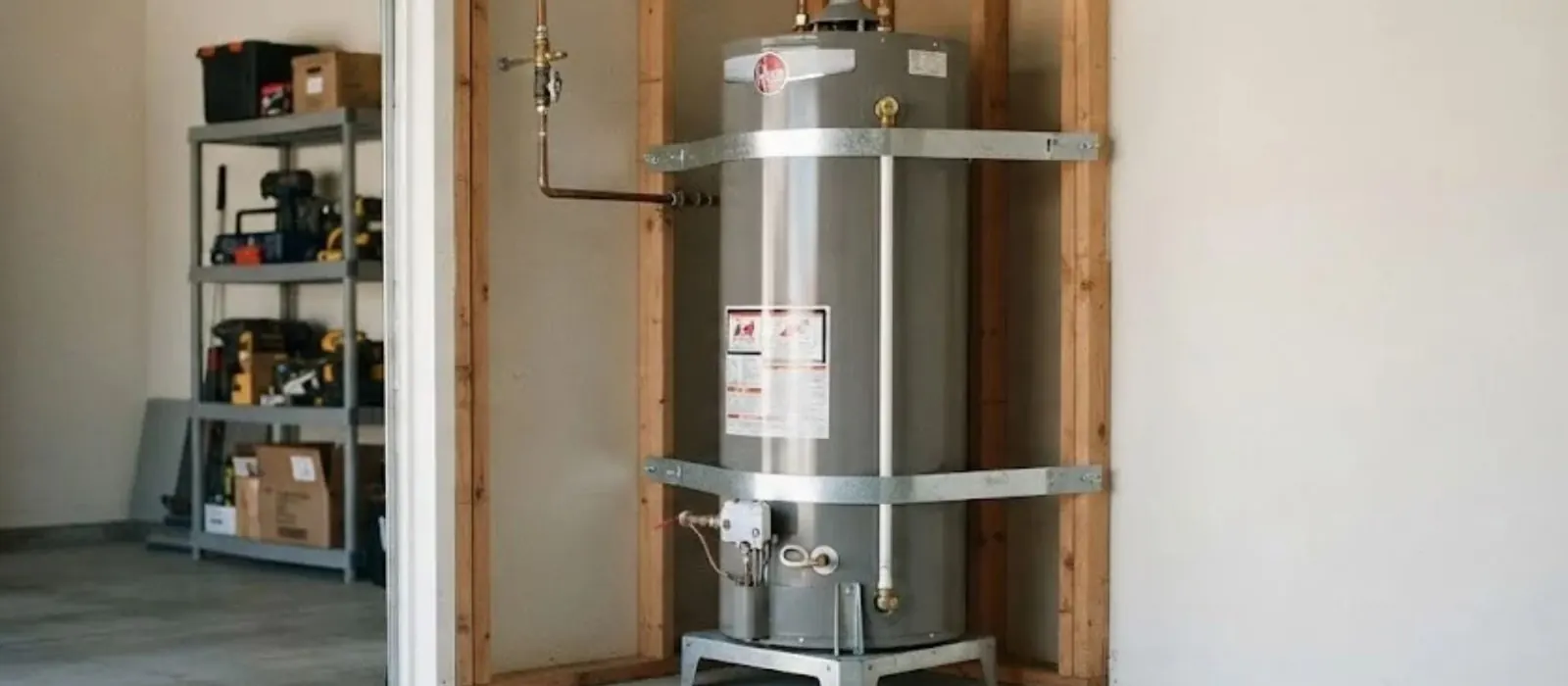
Planning a water heater install before something breaks
A scheduled install gives you something an emergency never does: time to choose the unit, the location and the day. Most homeowners who call ahead are replacing a tank that is showing its age, moving the heater during a remodel or adding capacity for a growing household. If your tank has already failed, our emergency replacement service is the faster path.
Planned work still starts with a phone call. Tell us the fuel type, the current location and what you want to change, and we sort out the rest on site.
Garage, closet or attic: where the heater lives
Placement drives the scope of an install more than the unit does. These are general considerations, and the actual layout of your home decides the details.
| Location | What helps | What to watch |
|---|---|---|
| Garage. | Easy access, room for a drain pan and floor drain, simpler venting for gas. | Impact damage from cars and storage, wet floors if it leaks. |
| Interior closet. | Short hot water runs to nearby bathrooms. | Tight clearances, venting and combustion air for gas, water damage inside walls. |
| Attic. | Frees up living space. | A leak soaks the ceiling below, hard access for service and replacement. |
| Exterior wall or side yard. | Good for some tankless units. | Weather exposure and freeze or corrosion protection needs. |
Any location with finished space below it should have a drain pan piped to a safe discharge point. Ask us how that works in your layout.
What the installation visit covers
The same checklist applies to a basic swap and a new location, with more steps as the scope grows.
On site we check and handle
- Fuel supply: gas line size and shutoff, or electric circuit and breaker.
- Venting path for gas models and any clearance concerns.
- Water supply and shutoff valves at the heater.
- Drain pan, relief discharge routing and overflow path.
- Dielectric or flexible connectors where the pipe types change.
- Testing for leaks, temperature and ignition before we leave.
Venting, gas and electric hookups in plain terms
A gas heater needs a vent path that carries combustion gases outdoors and a gas supply sized for the load. An electric heater needs a dedicated circuit with the right breaker and wire gauge for its elements. A hybrid heat pump unit adds a condensate drain and needs room for air movement.
Moving a heater usually means extending water lines, rerouting the vent or running a new circuit, and each adds scope. Some callers want to reroute a vent from the chimney to the side of the house, and that kind of change deserves a planned visit and a permit conversation first.
If you ever notice a gas smell around a heater, leave the building and call the gas utility or 911 before touching anything.
Want your install priced before you commit?
Call us with the unit type and where it sits, and we will explain the plan and the price before any work starts.
Permits are part of the job, not an extra
Greenacres accepts permit applications only electronically. For a like-for-like water heater changeout, the City uses the Palm Beach County Universal Permit Application plus a Water Heater Changeout Form with the manufacturer specs. A Notice of Commencement is added when the work is worth $5,000 or more.
Tankless and solar water heaters require plan check before work begins. For your specific address, ask the City of Greenacres building department. Inspections are scheduled by 3:00 pm.
New construction and remodel installs
A water heater in a new build or a remodel is coordinated with the other rough-in work: supply lines, venting, electrical and framing. That is a different job from a swap, and our plumbing installation service covers the broader scope.
If the remodel moves bathrooms or the kitchen, the heater location may change with it. Plan the hot water run length early, since a heater far from the fixtures means a longer wait for hot water at the tap.
Tank or tankless for a planned install
Because you are not rushed, a planned install is the time to weigh a tankless unit. We cover the details on our tankless water heater page, including plan check.
What affects an install quote
Two installs of the same model can cost very different amounts. We walk the space first and give a clear price before work starts.
What insurance may and may not cover
Insurance does not typically cover a planned upgrade. If an install follows a sudden failure, your policy may treat the damage differently, so check with your insurer.
Prices depend on those details, so call for your real number.
Installing to code
A new or relocated heater is installed under the Florida Building Code, Plumbing, which Florida builds on the International Plumbing Code (IPC), which rests on the IPC. Fuel, venting and water connections are all part of what an inspector can look at.
In Greenacres, permit applications are accepted only electronically, and inspections are scheduled by 3:00 pm. Tankless and solar installs go through a plan check, so ask the building department early.
Installation questions answered
Usually yes. Relocation affects water lines, venting and electrical or gas supply, and requires a permit conversation with the City.
Both work. A garage is easier to access and drain, while a closet shortens hot water runs but has tighter clearances. Your layout decides.
A like-for-like changeout uses the Palm Beach County Universal Permit Application and a Water Heater Changeout Form. Tankless needs plan check. Ask the City of Greenacres building department for your address.
Yes, in coordination with the rest of the plumbing rough-in. See our plumbing installation page.
Often, but it changes the electrical load and venting. We check the panel and space first.
Use our emergency replacement line. We take after-hours calls.