
Water backing up in the house right now
A drain that gurgles, gushes or pushes water back into a tub is an emergency, and our 24/7 line is answered around the clock. While you wait, stop running water in the house, keep the washer and dishwasher off, and keep everyone away from any wet outlets or cords on the floor.
If the washer drain is spilling or a toilet is rising, shut the toilet's supply valve behind the bowl and move rugs and electronics out of the way. Do not pour drain chemicals into a line that is already full. They sit in the standing water and can burn skin and eyes when we open the pipe.
Most calls we get fall into two groups. One fixture is slow or stopped, which usually means a clog in its own branch line. Several fixtures are slow at once, which points to the main drain, and that is a different job with a different machine.
How to tell a single clog from a main line problem
Where the water shows up tells you most of what you need to know before anyone arrives.
One sink or tub is slow
The blockage sits in that fixture's trap or its short branch line. Hair, soap scum and food scraps are the usual causes, and a hand snake clears most of them.
Toilet gurgles when the shower runs
Air is being pushed through a partly blocked line shared by both fixtures. Expect a clog further down the branch or in the main.
Tub fills when the washer drains
The lowest drain in the house takes the overflow first. That pattern points to the main line, not the tub.
Water or sewage in a floor drain
A floor drain in a garage or laundry room sits low on the system. Backup there means the main line is blocked or very slow.
Sewer smell near a drain
A dry trap, a cracked vent connection or a partly blocked line can all cause it. If the smell comes with slow drains, treat it as a blockage first.
Clog comes back within weeks
A repeat clog usually means grease build-up, roots or a bellied section of pipe. Cleaning alone only buys time until the cause is found.
Floor, tub, shower and kitchen drains all have different trap shapes and pipe sizes. A kitchen branch is typically a 2 inch line, while the main leaving the house is usually 4 inch. The tool and the approach change with each.
Drain stopped and water is rising?
Our line is answered around the clock. Call us and tell us which fixtures are affected.
Which cleaning method fits which drain
We start with the lightest tool that will do the job and move up only if the line tells us to.
| Where the clog is | Usual cause | Method we reach for first |
|---|---|---|
| Bathroom sink or tub. | Hair and soap scum in the trap or just past it. | Hand auger through the overflow or trap arm. |
| Kitchen sink. | Grease, food paste, disposal debris. | Cable machine, then clean out the trap arm. |
| Shower or floor drain. | Hair mats, sand, laundry lint. | Small drum machine, then flush with water. |
| Toilet. | Wipes, excess paper, toys, a flange problem. | Closet auger first, pull the toilet only if needed. |
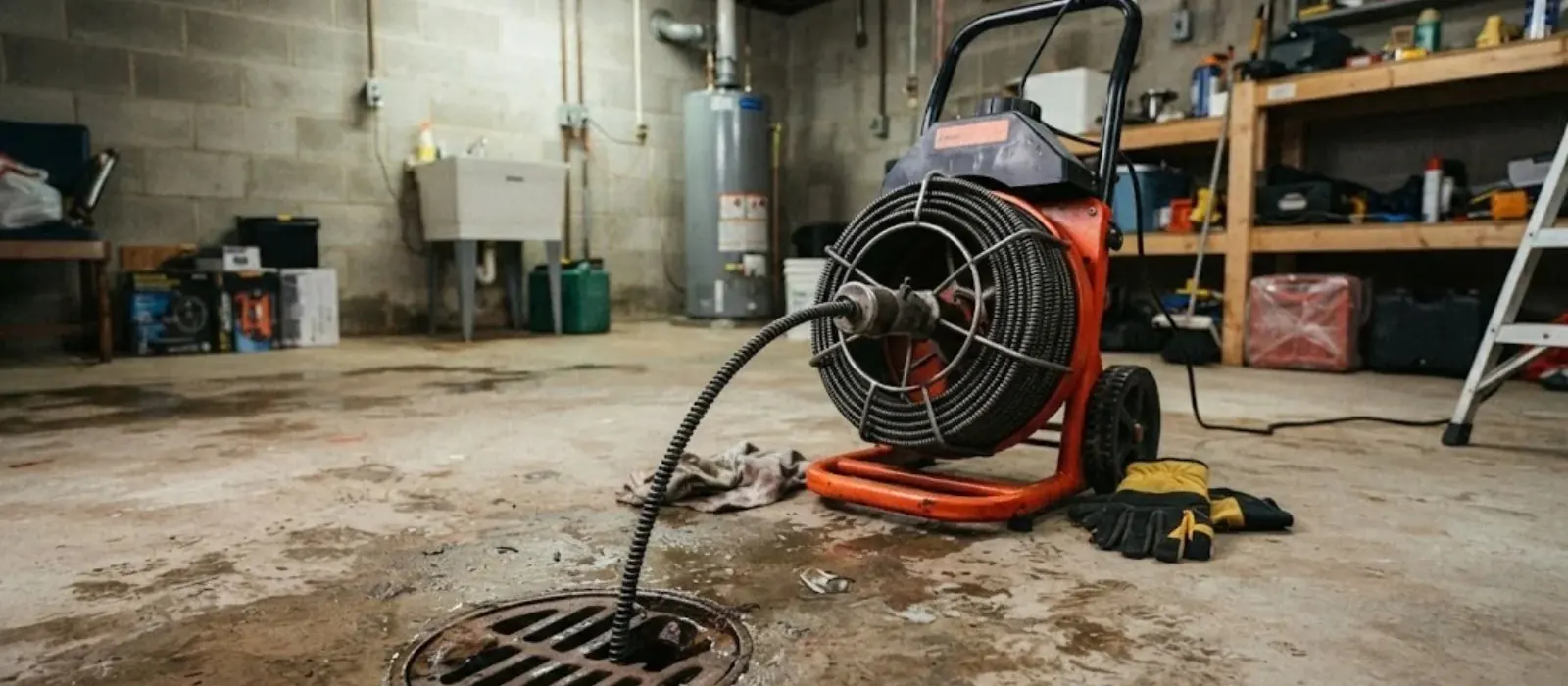
| Main line to the street or septic. | Roots, grease, bellied pipe, collapsed section. | Large cable machine, then camera, then jetting if warranted. |
Pulling a toilet to reach a blockage is a last step, not a first one. If a closet auger and a cable do not clear it, a camera shows whether the problem is a foreign object or a broken line.
Kitchen sinks, toilets and main line backups
Callers describe the same handful of problems over and over. A kitchen sink drains slowly for a week and then stops. A toilet will not flush and gurgles. The washer backs up into the tub, and then the master bath starts to back up too.
Each of those has a different likely source, so the first questions we ask are where the water is going and which fixtures still work. Getting that picture over the phone helps us bring the right machine on the first trip.
Clogged kitchen sinks
Kitchen lines carry grease that cools and hardens on the pipe wall, so the opening shrinks a little more with every dishwashing. A snake that only pokes a hole through the middle gives you a few good weeks. We use a cutting head to scrape the wall, and we tell you if the disposal outlet or the dishwasher connection is part of the problem.
Toilets that will not clear
A toilet that rises and gurgles may have a clog in its own trap, or it may be reporting a blocked branch. If a plunger and an auger fail, we look for wipes, a toy or a problem at the closet bend. A toilet repair is sometimes the real fix when the bowl or flange is the cause.
Main line backups
When water comes up in the lowest tub or shower, the main is the suspect. We run a large cable from the cleanout, and if the cutter returns with roots or a wad of paper, we know what we are dealing with. If the cable stops short or keeps catching, that is the point to look with a camera.
Snaking, jetting or a camera: when to step up
A cable machine breaks through most clogs, but it leaves residue on the pipe wall. When that residue is the real problem, the next tool matters.
A snake or cable is enough when
- One fixture is blocked and the others drain normally.
- The clog is soft, like hair, paper or food.
- This is the first time the line has stopped in months.
- The cable pulls back clean after one or two passes.
Step up when
- The same drain clogs again within weeks, so hydro jetting may be the better scouring tool.
- The cable catches on something hard or stops at the same spot twice.
- Several fixtures back up together, so a sewer inspection can show roots or a sag.
- Sewer smell or damp ground in the yard suggests a break.
Jetting does not repair a cracked or collapsed pipe, and a cable can mask one. A camera pass is how we tell the difference, and it costs less than digging in the wrong place.
Why chemical cleaners cost more than they save
Liquid openers sit on top of a full blockage and do nothing until the water drops. They can soften old pipe joints and leave caustic water in the trap that splashes on whoever opens it. If you already poured some, tell us before we start so we can protect our hands and your fixtures.
What shapes the cost of a drain cleaning visit
We set a clear price before work starts. Drain work varies widely, so we ask a few questions and then give you the real number for your line.
What insurance may and may not cover
Homeowner policies generally treat a gradual blockage differently from a sudden backup, and many exclude sewer backup unless an endorsement was added. Policies differ, so check yours and call your insurer. Photograph any water damage before you clean up.
Call for your real number. We would rather quote your actual line than give a range that does not fit it.
Keeping a Greenacres line clear after we leave
Greenacres homes tied to the county system send everything to a Palm Beach County Water Utilities main. Some older properties are still on septic, since the City's plan allows existing septic to remain until centralized service reaches them. Ask us which you have before any main line work, because a septic line has a tank and field that a sewer lateral does not.
A few habits matter more than any product. Wipe grease from pans into the trash instead of the sink, use a hair catcher in showers, and keep wipes labeled flushable out of the toilet. If your main keeps clogging, a scheduled sewer line cleaning is cheaper than a weekend emergency.
What the plumbing code says about drains
Drain, waste and vent piping falls under the Florida Building Code, Plumbing, which Florida builds on the International Plumbing Code (IPC). The IPC covers how drains are sloped and vented, which is why a slow drain can trace back to venting and not just a clog.
Whether a job needs a permit depends on the work, so ask the City of Greenacres building department before you replace any section of drain pipe.
Drain cleaning questions from Greenacres callers
Yes. Our line is answered around the clock, including nights, weekends and holidays. Tell us which fixtures are backing up and whether water is coming up inside the house, and we will schedule the earliest appointment available. Stop running water and keep the washer off while you wait.
Often, yes. If only one fixture is slow, it is likely a branch clog. If a tub gurgles when the washer drains or a floor drain backs up, the main is the better guess. We confirm it when we put a cable in.
Not always. A snake clears the blockage but can leave grease or scale on the pipe wall. If the same line stops again within weeks, we usually suggest a camera look and possibly jetting.
We advise against it. It rarely clears a full blockage and leaves harsh liquid in the trap. Tell us if you used any so we can work safely.
Yes. Floor drains, shower drains, tub drains and laundry standpipes all get cleaned. Each has its own trap and pipe size, so we bring the machine that fits.
A smell plus slow drains suggests a partly blocked line. A dry trap or a vent problem can cause odor alone. If you ever smell gas, leave the building and call the gas utility or 911 before anything else.
It depends on your policy. Many policies treat sudden backups and gradual clogs differently, and sewer backup coverage is often a separate add-on. Check your policy, call your insurer, and take photos of any damage.