
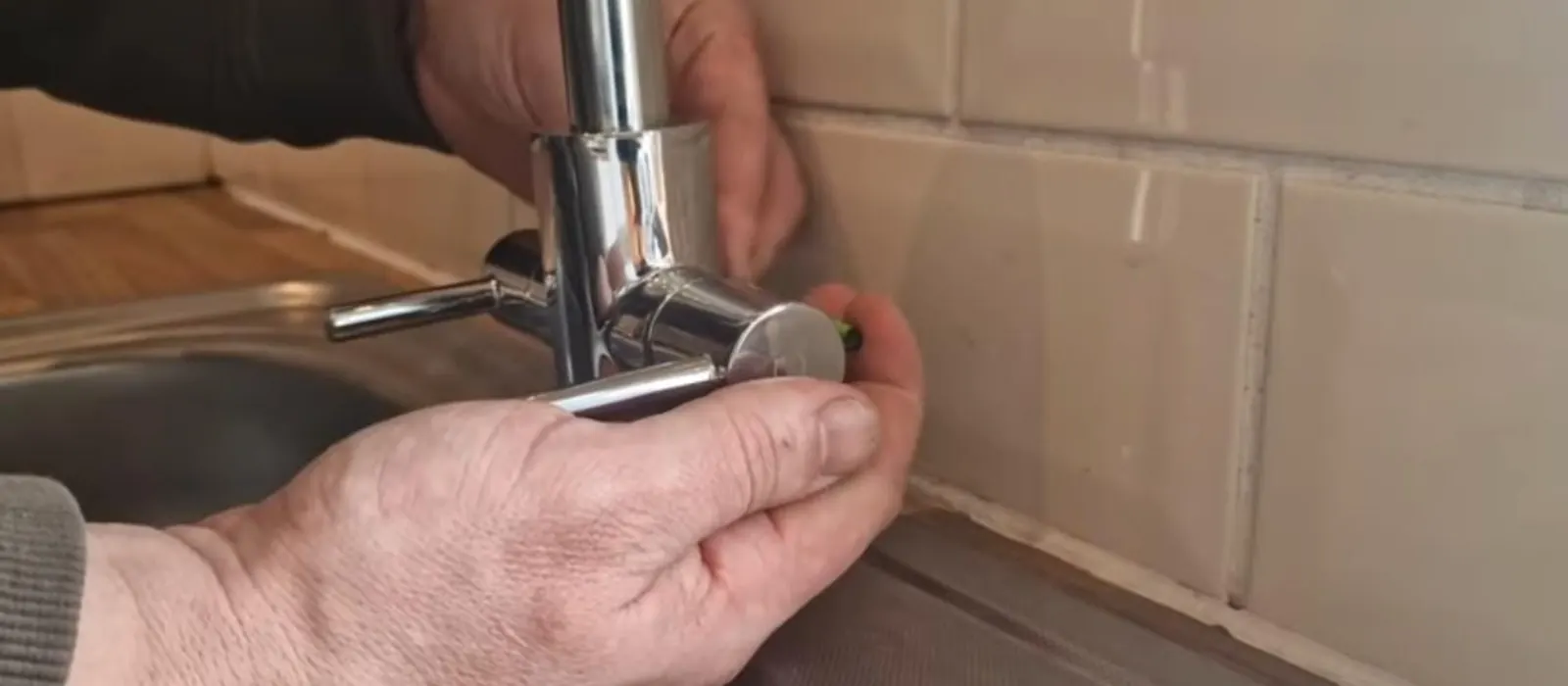
Faucet won't shut off or spraying water?
When a faucet will not turn off or water is spraying from the body or the wall, the first move is the same: find the shutoff. Most sinks have two small oval or round stops under the cabinet, so turn them clockwise. Our 24/7 line is open if you can't stop the flow, and while you wait, keep drains clear of towels and keep wet areas away from any outlet or power strip.
If the stops under the sink are stuck or leaking, the next one is the main valve at the house. Once the water is off, call us and describe where it is leaking, since a handle drip and a cracked body need different parts.
Tub or shower that will not shut off
Most tubs and showers do not have their own stops, so there may be nothing to close at the fixture. Shut the main valve and call. A worn cartridge or seat inside the wall valve is the usual cause, and it can be replaced without tearing out the tile in many setups.
Do-it-yourself or call a plumber?
Some faucet jobs are fine for a homeowner with a wrench and patience. Others tend to turn a drip into a wet wall.
Reasonable to try yourself
- Cleaning a clogged aerator by unscrewing it and soaking it in vinegar.
- Tightening a loose handle with the small set screw under the cap.
- Replacing the washer on an old compression hose bib.
- Swapping a flexible supply line when the shutoff works.
Better left to a plumber
- A faucet that does not shut off completely even with the stops closed.
- Any leak inside the wall behind a tub or shower valve.
- Corroded or frozen-shut shutoff stops under the sink.
- Water spraying from the faucet body or where it meets the counter.
Water still running and won't stop?
Shut the main, then ring us. We book same-day and after-hours visits when schedule allows.
What is inside a leaking faucet
Nearly every drip comes from one small wearing part. Older compression faucets use a rubber washer pressed against a metal seat, and over time the washer hardens and the seat pits. Newer single-handle faucets use a cartridge, a plastic or brass cylinder with ports that line up to mix hot and cold.
Cartridge, washer and seat
If the faucet drips from the spout when closed, the cartridge or washer and seat are the usual suspects. If it drips around the handle, the cartridge seal or an O-ring has worn. We match the part to the faucet instead of swapping blindly.
Aerator and weak flow
The aerator is the screen at the tip of the spout. When flow drops or sprays sideways, mineral flakes or sediment have usually clogged it, and it can be cleaned in minutes. If flow is low at every fixture, that is a pressure problem and not the faucet.
Where the faucet is and what it needs
Different places in the house fail in different ways. This is how we sort the calls.
| Faucet | Common trouble | Typical fix |
|---|---|---|
| Kitchen. | Drips from spout, leaks under sink, loose sprayer hose. | Cartridge or hose, tighten supply connections. |
| Bathroom sink. | Slow drip, stiff handle, low flow. | Cartridge, aerator clean, new supply lines. |
| Tub and shower. | Running after shutoff, scalding or cold swings. | Cartridge or valve seat inside the wall. |
| Outdoor hose bib. | Drips from the stem, leaks behind the handle, hose stuck. | Packing or washer, or a new bib if corroded. |
| Laundry and utility sink. | Leaking handles, bad stops behind the washer. | Valve replacement, new braided lines. |
When the shutoff valve is the real problem
A surprising number of faucet calls turn out to be failing angle stops, the small valves under a sink or behind a toilet. They can drip at the stem, refuse to turn, or break off when touched after sitting for years. When that happens, we replace the stop first so the faucet job can be done with the water off.
If the whole house needs more valves or the fixture needs a new supply run, our plumbing installation work covers that. And if a drip seems to come from inside a wall or under the floor, our leak detection visit finds it before you open drywall.
Repair it or put in a new faucet?
Repair makes sense when the finish is intact and the parts for the model are still on the shelf. Replace when the body is pitted or cracked, the spout wobbles, the finish is flaking, or parts are no longer made. If you plan to replace anyway, pick up the new faucet first, check that its hole count matches your sink or counter, and we will install it and test every connection.
How faucet pricing is worked out
We tell you the price before we start, and we only quote after we see which faucet it is. These factors drive the number.
What insurance may and may not cover
Some policies cover sudden water damage from a failed faucet or supply line and not the faucet itself, while slow drips may be excluded. Take photos of any damage, shut the water off, and call your insurer before you throw anything away.
Call for your real number and we will walk you through it.
Faucets and the plumbing code
Fixtures and their supply connections fall under the Florida Building Code, Plumbing, which Florida builds on the International Plumbing Code (IPC), based on the IPC. A cartridge swap is maintenance, while adding a new faucet location is installation work.
If you are adding or moving supply lines, ask the City of Greenacres building department whether a permit applies.
Faucet repair questions
Yes. Our line is answered around the clock, and a faucet that will not shut off or a spraying valve gets priority for a same-day or after-hours visit. Close the stops under the sink or the main valve first, then call and describe the leak.
Turn the stop valves under the sink clockwise. If there are none, as with most tubs and showers, close the main valve at the house. Do not keep forcing the handle, because that can break the cartridge.
A drip from the spout is usually a worn washer, seat or cartridge. A drip around the handle is typically a worn seal or O-ring. Both are repairable in most cases.
Yes. A hose bib that drips from the stem often just needs new packing or a washer, and a corroded or cracked one is replaced. If you can't get the hose off, don't force it, since a broken bib can leak behind the wall.
If the faucet body and finish are sound and parts are available, a repair is usually enough. If it is pitted, cracked, wobbly or the parts are discontinued, a new faucet is the better buy.
That valve should be replaced. We turn off the main, swap the stop and add a new supply line, then fix the faucet itself.