
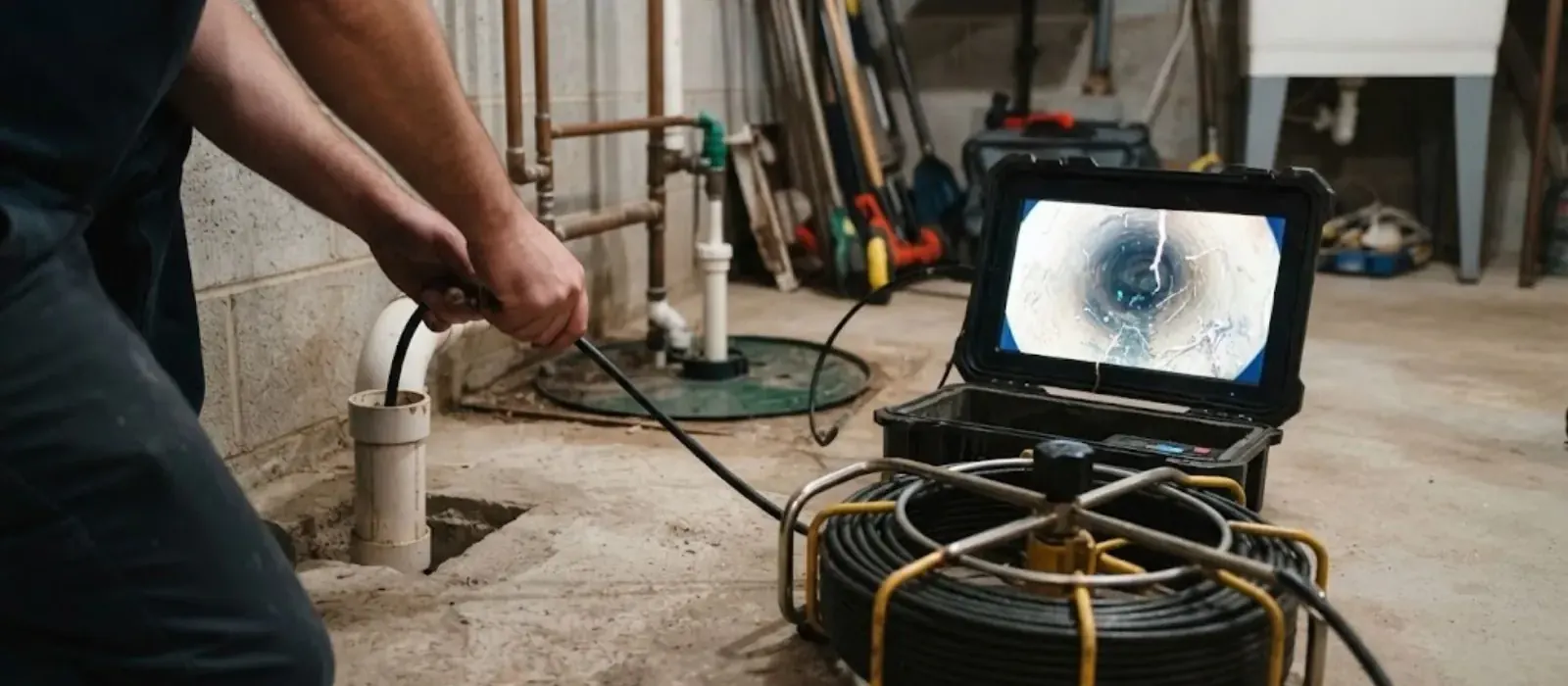
What a sewer camera actually shows
A sewer inspection feeds a small waterproof camera into the line through a cleanout or an opened fixture. A light on the head shows the pipe wall on a monitor as the camera moves along. We see cracks, roots, joints that have shifted, standing water and the pipe material.
The cable is marked in feet, so a fault is recorded at a measured distance from the access point. A locator can then trace the camera from above ground, which tells a repair crew where to dig if digging is needed.
When it makes sense to order one
Not every drain problem needs a camera. These situations usually do.
Buying a home
Sewer lines are out of sight, and a seller cannot always say what is under the yard. Footage before closing shows root damage, a belly or a crack.
Clogs that keep returning
If a line has been cleared more than once and still backs up, the cause is probably a defect, and a camera finds it.
Before lining or replacement
Repair methods depend on the pipe's condition and slope, so a camera is how a contractor chooses between lining and digging.
Odor or soggy ground
A sewer smell without an obvious source, or a wet strip of yard along the pipe route, can mean a break that the camera can confirm.
If sewage is backing up right now, clearing the line comes first. See sewer line cleaning, and schedule the camera once water moves again.
What a typical report covers
Reports differ by company, so ask what yours will include. In general terms, a useful report has the following.
- Pipe material and approximate diameter where visible.
- Footage of the run with distance markers.
- Locations of cracks, breaks and offset joints.
- Root entry points and how heavy the growth is.
- Any low spots where water or debris collects.
- Notes on whether the line looks suitable for lining or needs digging.
Ask for the video file as well as the write-up, since you can share it with a seller, an insurer or a second contractor.
Want a camera on your line?
Tell us why you are checking, whether for a purchase or repeat clogs, and we will set up the visit.
What the camera cannot show
A camera has limits. It cannot see through a full blockage, so a clogged line often has to be cleared before the lens can pass. It sees the inside of the pipe, not the soil outside, so it cannot say how stable the ground is around a fault.
It also cannot show leaks that only open under pressure, or a crack that is hairline-thin and tightly closed. And it covers only the part of the line it reaches, which is why access point and total footage matter. If part of the run is out of reach, the report should say so.
How the footage points to a repair
The camera result and the repair choice go together. Here is how common findings usually translate.
| What the camera finds | What it usually means | Typical next step |
|---|---|---|
| Roots at one joint. | A single entry point is open. | Cut roots, then consider a spot repair or short liner. |
| Roots at many joints. | The line is leaking along its length. | Longer lining or replacement, plus root control. |
| Standing water in a section. | A belly or low spot is holding waste. | Dig and re-lay that section to fix the slope. |
| Offset joint with a lip. | Pipe sections have moved out of line. | Spot repair, or dig if the shift is large. |
| Flaking, rough iron wall. | Cast iron is corroding inside. | Replace weak sections or line sound ones. |
| Clean, smooth pipe. | The problem is elsewhere. | Look at branch lines, vents or the building drain. |
Full repair choices are laid out on our sewer line repair page, including trenchless and dig-down options.
A camera before you buy a house
A home inspector looks at what is visible. A sewer camera looks at what is not. If an offer is pending, ask the seller for access to the cleanout and schedule the camera early in the inspection period, since repairs can be negotiated or priced in.
Findings from footage give you something concrete to discuss, and a line in good shape is worth knowing about too.
What affects the price of a sewer camera inspection
The cost of a camera visit depends on a few simple things.
What insurance may and may not cover
Insurance coverage for sewer problems varies. Some policies cover sudden failure and not gradual wear, and a camera result can support a claim, though policies differ. Check with your insurer.
We set a clear price before work starts. To get your real number, call us and say where you can reach the line.
What a camera inspection is measured against
A camera shows what the pipe looks like. The standard it is judged against is the Florida Building Code, Plumbing, which Florida builds on the International Plumbing Code (IPC), which rests on the IPC.
The footage helps you decide on repairs and gives a licensed contractor something concrete to work from. Permit questions go to the City of Greenacres building department.
Sewer inspection questions
It depends on the line length and whether it needs clearing first. A clear, accessible line is generally a short visit, and we give you an idea when you call.
A cleanout makes it easy. If there is none, we can often reach the line through a toilet or another opening, though that adds some work.
It shows the pipe's condition, slope and where faults sit. That is what decides between lining and digging, as described on our sewer line repair page.
It is a sensible step if the home has older pipe, trees near the line or a history of clogs. Ask the seller for cleanout access early in the process.
Ask when you book. Having the file lets you share it with a seller, insurer or another contractor.
Ask PBCWUD or the City of Greenacres. The City plan encourages converting septic to centralized service, and existing septic may remain until it is available, so a camera may be on a septic line instead.