
What we install
Installation calls come from every part of a home. Some people have bought a new sink or tub and need it hooked up. Others are adding a bathroom, moving a kitchen wall, or running water to a washer and dryer that never had connections.
Whatever the project, call us with a short description. It helps to know what you have, what you want, and whether walls or floors are already open.
- Kitchen sinks, bar sinks and utility sinks.
- Tubs, showers and shower valves.
- Washer boxes and laundry supply and drain lines.
- Shutoff stops and main shutoff valves.
- Water pressure regulators and outdoor hose bibs.
- Rough-in for new bathrooms and remodels.
Which project, what work
| Project | What is involved | Worth knowing |
|---|---|---|
| New bathroom. | Supply, drain and vent rough-in, then fixtures. | Needs drain access, a vent path and usually a permit. |
| Laundry hookup. | Supply valves, a standpipe or box, drain tie-in. | A washer drain must be sized and trapped correctly. |
| Kitchen remodel. | Move or add sink, dishwasher and disposal lines. | Plan appliance specs before the rough-in. |
| Replacing fixtures. | Disconnect, set, reconnect, test. | Existing stops often need replacing. |
| Outdoor spigot. | Tie into a supply line, add a valve. | Keep it accessible and drained. |
Remodel rough-in, step by step in the walls
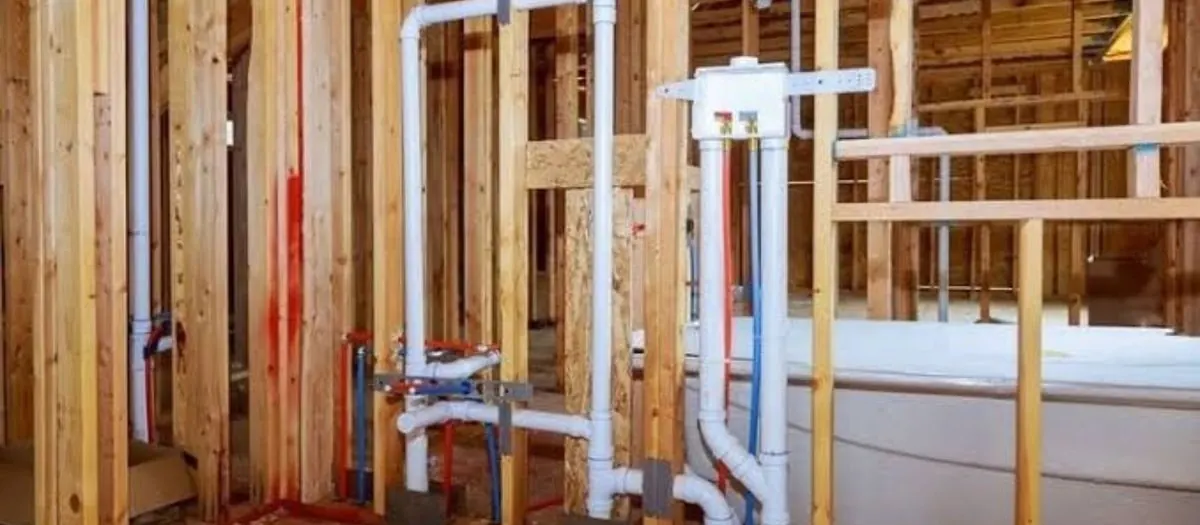
Rough-in is the part you never see once the drywall goes up. Supply lines get their stub-outs, drains get sloped to the main, and vents go through the roof or tie into existing ones. We set stub heights to your fixture specs so a tub spout, a vanity or a wall-hung toilet lands where the design says it should.
The key is planning. Choose fixtures before the rough-in, because stub locations differ from one model to another. If you change your mind afterward, it can mean reopening the wall.
Adding a bathroom or laundry line
A new bathroom or laundry needs a drain with enough slope and a vent, plus hot and cold supply. Slab-on-grade homes may need floor cutting to reach the drain, so we check the layout first and tell you what to expect.
Planning a remodel or new fixture?
Tell us what you are building and we will explain the plumbing side before you buy.
Valves, regulators and outdoor spigots
A good shutoff valve is the cheapest insurance you can install. Every fixture should have its own stop, and the house should have a main valve that turns freely. If either one is stuck, replace it before something fails.
A pressure regulator sits at the main entry and keeps house pressure steady. Weak, noisy or fluctuating pressure can point to a worn regulator, and a plumber can test it with a gauge on a hose bib. Outdoor spigots should have a shutoff, be accessible, and be tied into a good supply line, not a corroded stub.
Permits, licensing and the building department
In Greenacres, permit applications are accepted only electronically, work must be done by a licensed contractor or an exempt owner-builder, and inspections must be scheduled by 3:00 pm. Ask the City of Greenacres building department about your project.
Before you hire anyone
Palm Beach County gives homeowners a few checks.
- Confirm the Certificate of Competency in the county licensed contractor search at pbc.gov/pzb.
- Verify state licensing at myfloridalicense.com.
- Ask for current proof of insurance.
- A Business Tax Receipt is not a license.
- Be cautious about large upfront payments or oral-only deals.
Using an unlicensed contractor can bring code enforcement fines to the property owner.
Related work that often goes with an install
Many installs bring other jobs along. A new heater may be part of the project, which is covered under water heater installation. A swapped bathroom may need a toilet install, a new vanity may need a faucet repaired or replaced, and a kitchen update may add a garbage disposal. We can do them in one visit when schedules allow.
How installation pricing is set
We give you a clear price before work starts.
What insurance may and may not cover
Installation is a planned project and generally not an insurance matter. If a failure caused damage, document it and ask your insurer.
Call for your real number once we know the scope.
What to have ready when you call
Describe the project
New or replacement, which rooms, and whether walls are open.
Fixture details
Model names or spec sheets for sinks, tubs, valves and appliances.
Photos and measurements
Pictures of the area and of existing plumbing, plus the room dimensions.
Your timeline
Any deadline, such as a contractor schedule or a move-in date.
New work and the code
New fixtures, lines and rough-in work follow the Florida Building Code, Plumbing, which Florida builds on the International Plumbing Code (IPC), which rests on the IPC. Inspectors look at that new work, so the details need to be right the first time.
Ask the City of Greenacres building department which permits apply to your project. Inspections there are scheduled by 3:00 pm.
Installation questions
Permit needs depend on the project, so ask before you start. Greenacres accepts permit applications electronically only, and the work must be done by a licensed contractor or an exempt owner-builder. Ask the City of Greenacres building department about your specific project.
Yes. Send the model names or spec sheets so we can check rough-in dimensions and parts.
Usually, yes, depending on drain access and venting. We look at the layout first and explain what the job involves.
Verify the Certificate of Competency through the Palm Beach County licensed contractor search, check state licensing at myfloridalicense.com, and confirm current insurance.
Yes. Stuck or leaking stops are among the most common installs we do, and we usually replace them along with a fixture.
Yes. See our water heater installation page for the permit details.