
Safety first, every time
Never put your hand into a disposal, even when it is switched off. Flip the wall switch off and unplug the unit or turn off its breaker before you touch anything, and use tongs or pliers to pull out objects you can see.
Kitchen sink backed up or disposal leaking?
A disposal that is leaking under the sink or sending water up the other side of a double basin needs attention quickly, and our 24/7 line is open for it. Stop running the dishwasher and the faucet, because both drain through the same trap. Put a bowl or bucket under the leak, pull the plug from the outlet under the sink, and keep the area dry.
When you are ready, call us and say where the water is showing up. A leak from the top flange, the side near the dishwasher hose, or the bottom of the housing point to different fixes.
Symptoms and what they usually mean
Callers tend to describe the same few problems with their disposal.
Humming but not spinning
The motor has power but the flywheel is stuck. A wedged bone, fruit pit or utensil is the usual reason.
Completely silent
No hum and no spin often means a tripped overload. Check the red reset button on the bottom and the outlet or breaker.
Leaking underneath
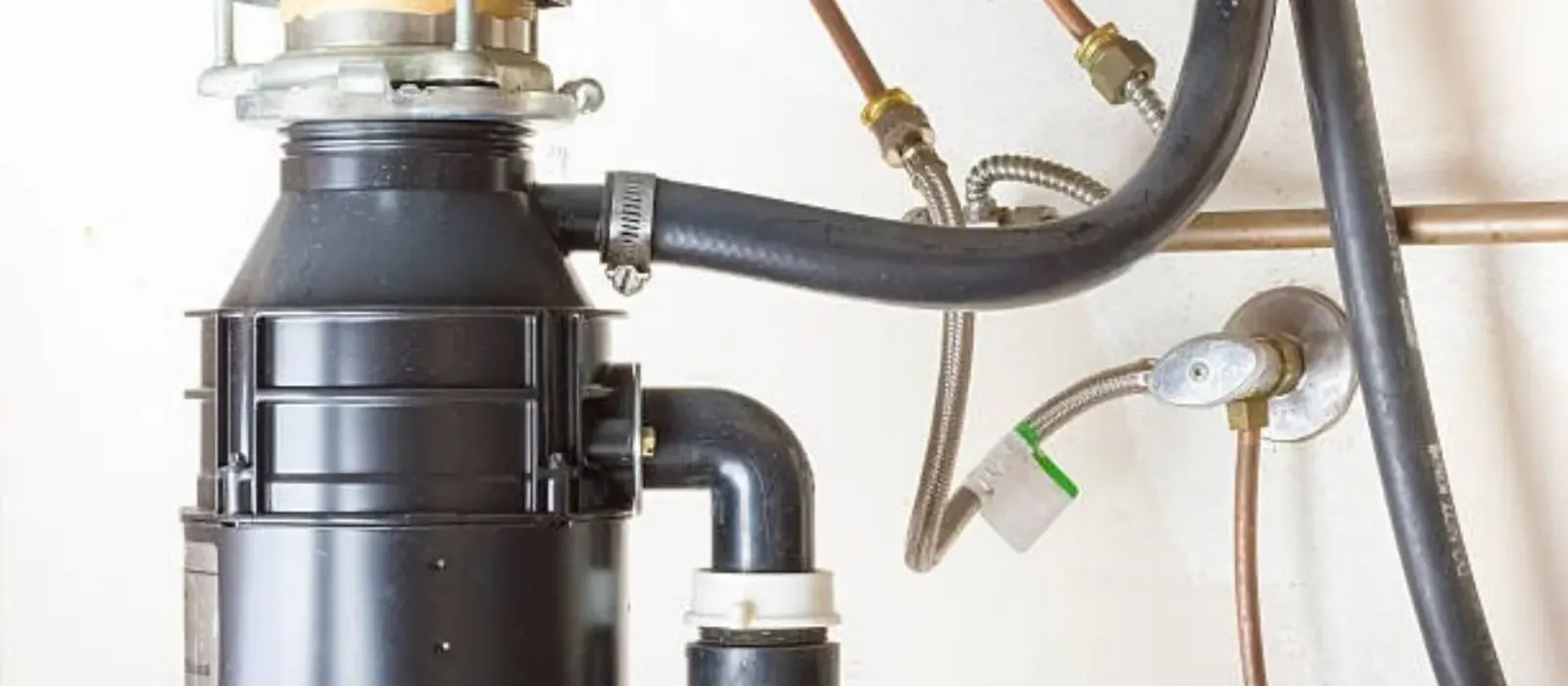
Water at the top is the sink flange seal. Water at the side is the dishwasher hose or drain elbow. Water from the bottom or the body means the housing has failed.
Slow to drain or standing water
Food buildup in the trap or the pipe beyond the disposal. The disposal may be fine and the line is the problem.
Bad smell
Food residue clinging to the grinding chamber and splash guard. A rubber baffle that has gone slimy often holds the odor.
Metal grinding or rattling
A spoon or small object is inside, or the grinding parts have worn out. Do not run it until it is checked.
Clearing a jam the safe way
Power off
Switch off the wall switch and unplug the unit, or flip the breaker. This is not optional.
Use the hex-key slot
Most disposals have a socket at the center of the bottom. Insert the small hex wrench and work it back and forth until the flywheel turns freely.
Remove the item
Look inside with a flashlight and pull out any object with tongs, never fingers.
Press reset
Wait a few minutes, press the red button on the bottom, restore power and run cold water. If it hums or trips again, stop and call.
Disposal dead or water pooling under the sink?
Unplug it, stop the water, and ring our 24/7 line. We schedule same-day and after-hours visits when we can.
Repair the disposal or put in a new one?
| Situation | Usually repairable | Usually replace |
|---|---|---|
| Jam or hum. | Clear it, free the flywheel, reset. | Motor will not turn even after a clear jam. |
| Leak at the top flange. | Reseat with new putty or gasket. | Cracked mounting ring. |
| Leak at the side or hose. | Tighten or replace the dishwasher or drain connection. | Rusted-through side seam. |
| Leak from the bottom or body. | Rarely fixable. | Housing has corroded or cracked. |
| Constant tripping, burning smell. | Check wiring and the reset. | Motor is failing. |
| Loud grinding with no object. | Not likely. | Internal parts are worn out. |
Disposals are not meant to last forever, and when the housing leaks, replacement is almost always the answer.
Putting in a new disposal
A new unit means removing the old one from the mounting ring, cleaning the sink opening, fitting a new flange with plumber's putty, and locking the disposal onto the ring. We reconnect the drain elbow to the trap and the dishwasher hose, and if the dishwasher is hooked up, we knock out the plug inside the inlet so it can drain.
A few things affect the job: whether there is an outlet and switch under or beside the sink, the horsepower and size you choose, and whether the trap arm lines up with the new outlet height. A unit with a cord and plug is simpler than one that has to be hardwired. If there has never been a disposal under the sink, say so when you call, since wiring and venting matter.
What should and should not go down
Fine in small amounts
- Soft scraps and small bits of cooked food, with cold water running.
- Citrus peel in small pieces for a fresh smell.
- A few ice cubes now and then to knock off residue.
Keep out of the disposal
- Grease, fat and oil, which harden further down the line.
- Coffee grounds, eggshells, pasta and rice, which pack into sludge.
- Potato peels, celery and other stringy or starchy fibers.
- Bones, fruit pits and anything not food.
Most kitchen line clogs we see start with grease and starch settling in the trap arm and beyond. If the water stands in both basins even after the disposal runs, our drain cleaning work clears the line behind it.
What drives the cost of a disposal job
Our price is set before work starts, and we do not guess at it on the phone.
What insurance may and may not cover
Policies usually treat sudden water damage differently from slow leaks, and many do not cover the disposal as an appliance. If water reached cabinets or flooring, photograph it and call your insurer to ask.
Call for your real number once we know the unit and the setup.
Disposals, wiring and plumbing rules
The drain connections on a disposal follow the Florida Building Code, Plumbing, which Florida builds on the International Plumbing Code (IPC), built on the IPC. The electrical side is covered by a separate code, so treat the two jobs separately.
Replacing a cord-type unit is routine. If new wiring or a changed drain is involved, ask the City of Greenacres building department about permits.
Disposal questions, answered
Yes. The phone line is answered around the clock, and we offer same-day and after-hours appointments when available for leaks and backups under the sink. Unplug the unit and stop the water before you call.
The motor is getting power but the grinding plate is jammed. Turn the power off, use the hex key in the bottom slot to free it, remove the object, and press the reset button.
On most units it is a small red button on the bottom of the housing, under the sink. Wait a few minutes after a jam so the overload cools before you press it.
A leak from the body or the bottom of the housing means the casing has corroded or cracked. That usually cannot be repaired and the unit should be replaced.
No. Always switch it off, unplug it, and use tongs or the hex wrench. A disposal can start even when you think it is off.
The clog is probably in the trap or the pipe beyond it. Grease and starchy food are common causes, and a cable cleaning from the sink or a cleanout usually clears it.
Yes. Tell us the model and whether the sink has an outlet or switch, and bring any mounting parts that came in the box.