
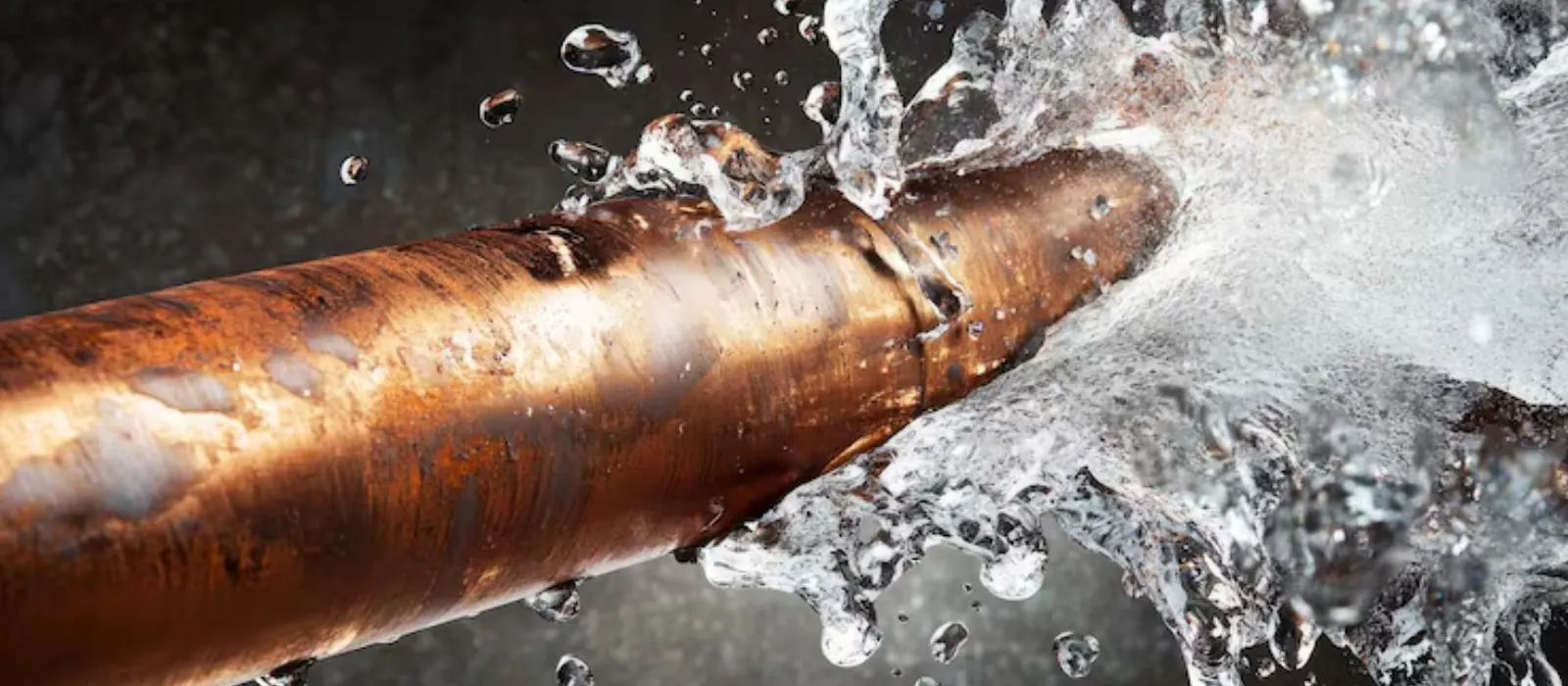
Water pouring from a pipe: the first five minutes
Find the main shutoff
Most Greenacres homes have a valve on the front wall near the hose bib, or a box at the meter. Turn a ball valve a quarter turn, or a round gate valve clockwise until it stops.
Open the lowest faucet
Run a tub or outdoor spigot to drain the pipes. That cuts the flow at the break and drops the pressure.
Turn off power to wet areas
If water is falling near a panel, outlets or a ceiling fixture, switch off those breakers only if you can reach the panel while standing dry. Otherwise stay out and call.
Call our 24/7 line
Call us and say where the water is, whether it has stopped, and which walls are wet. That helps us send the right parts on the first trip.
A burst pipe in a Florida house
Our line is answered around the clock, and we book same-day appointments when available. A break in a wall, ceiling or slab can put hundreds of gallons into a house in a short time, so the shutoff matters more than anything you do after it.
Florida pipes rarely burst from ice. The usual causes here are age, corrosion on galvanized and old copper lines, pressure surges when a supply is turned on or off, tree roots pressing against buried pipe, and impact from yard work or a contractor's equipment. Plastic lines fail at fittings and clamps more than in the pipe body.
If the break is near electrical or a ceiling is sagging
Water and wiring do not mix. If a ceiling is bulging, do not poke it open to let the water out while standing under it. Keep away, shut off the main, and let us deal with the drain-down.
What to do before we arrive
A few quick steps limit the damage and make the repair faster.
Photograph the damage
Take clear photos of the wet area, the pipe and anything damaged. You may want them for an insurance claim later.
Move what you can
Lift rugs, electronics and cardboard boxes off wet floors. Wet drywall and insulation get heavy, so clear the room.
Keep the water off
Do not turn the main back on to test. Wait until we have capped or replaced the failed section.
Note what you saw
Tell us if you heard a bang, saw rust, or noticed the pressure change before the break. It points to the cause.
Repair a section or replace more of the line
A small patch is not always the right call. This is how we decide.
| What we find | Likely approach | Why |
|---|---|---|
| One clean split in otherwise sound copper. | Cut out and replace that section. | The surrounding pipe is in good shape, so a local repair holds. |
| Pinholes along a run of old galvanized or thin copper. | Replace the whole run, see repiping | A fixed hole is soon followed by the next one nearby. |
| Break at a fitting or clamp on plastic line. | Replace the fitting and check adjoining joints. | Joint failure often repeats along the same assembly. |
| Crack in the buried line between meter and house. | Repair or replace, see water service line repair | A dig is needed anyway, so we compare spot repair to a new line. |
| Water suspected under a concrete floor. | Locate first, then spot repair or reroute, see slab leak repair | Opening a slab at the wrong spot wastes time and money. |
We show you the failed pipe and explain what we see before you agree to a plan.
Water stopped but the pipe is still broken?
Our line is answered around the clock, and we offer same-day appointments when available. Call (561) 448-8545 when you are ready.
When it is not clear where the water is coming from
Some breaks are obvious, like a spray from a hose bib line. Others show up as a wet baseboard, a stain on the garage ceiling, or a meter that keeps turning with every fixture off. Water travels along framing and slab before it appears.
If you cannot see the break, we use leak detection to track it down before cutting into walls. That saves drywall and keeps the repair as small as the problem is.
What affects the cost of a burst pipe repair
What insurance may and may not cover
Policies often cover water damage from a sudden pipe failure but may exclude damage from slow leaks or a pipe that was clearly neglected. Terms differ, so check your policy and call your insurer. Keep photos, receipts and any damaged items until the claim is settled.
Call for your real number. We give a clear price before work starts, and you decide.
Code and permits after a burst
Replacing a failed section of supply line is plumbing work that falls under the Florida Building Code, Plumbing, which Florida builds on the International Plumbing Code (IPC), built on the IPC. Emergency shutoff and drying come first, and the paperwork question comes right after.
Ask the City of Greenacres building department whether your repair needs a permit. It also helps to know that Greenacres requires a licensed contractor or an exempt owner-builder for permitted work.
Burst pipe questions
Yes. Our line is answered around the clock, and we schedule the earliest available appointment, same day when we can. Shut off the main, open a low faucet to drain the lines, and keep clear of wet electrical until we arrive.
Look near the front hose bib, along the wall by the water heater, or in a box near the meter at the street. A quarter turn closes a ball valve, and a round handle closes clockwise. If it will not turn, do not force it. Call us.
A push-fit coupling can stop a small leak for a short time, but it does not replace a proper repair. If the pipe is in a wall, behind a ceiling or under the floor, wait for a licensed plumber.
Age and corrosion are the most common causes. Pressure surges, tree roots pushing on buried lines, and impact from digging also break pipes. Plastic lines often fail at fittings.
We show you the failed section and the condition of the pipe around it. If the surrounding pipe is sound, a section repair is enough. If it is thinning or pitted, we discuss replacing more.
We turn it back on and check the repair under pressure before we go. Do not reopen it yourself until we have confirmed the line is closed.
It might. Coverage often depends on whether the failure was sudden or gradual. Check your policy, call your insurer, and document the damage with photos.