
Slow drain, clean strainer: where the problem usually lives
A kitchen sink that drains slowly after you have cleared the strainer is rarely about the strainer. The usual causes are a greasy trap, a blockage at the disposal or dishwasher connection, a partly blocked vent, or a clog that sits in the branch shared with other fixtures.
Work from the sink outward, the same way we do on calls in Royal Palm Beach and Lake Worth Beach. Each layer you rule out narrows the problem, and the symptoms you see along the way tell you if the trouble is a local clog or a main line problem.
What the symptom tells you
Start with this table. Match what you see to the likely cause, then try the first step listed.
| What you notice | Likely cause | Try first |
|---|---|---|
| Sink drains slowly, other drains fine. | Grease or debris in the trap or the short tailpiece. | Clean the P-trap. |
| One bowl of a double sink drains, the other does not. | Blockage between the bowls or in one trap arm. | Check the tee fitting and the second bowl's trap. |
| Water rises in the sink when the dishwasher runs. | Dishwasher drain tied into a clogged disposal or branch. | Clear the disposal and the dishwasher hose connection. |
| Gurgling, slow drain and a sewage smell. | Partly blocked vent or a clog farther down the branch. | Stop adding water and call. |
| Sink and a nearby tub or washer all slow. | Shared branch line is blocked. | Stop using the fixtures and call for a cable machine. |
| Water backs up from a floor drain or toilet. | Main line problem. | Stop using water and call right away. |
Steps to try before you call
Check the disposal and the strainer
Run cold water, switch the disposal on if it works, and look for jam signs. A disposal that hums without turning has a stuck plate, and the reset button under the unit is worth a press.
Plunge with a seal
Block the second bowl and the dishwasher line with a wet rag, fill the bowl with a few inches of water, and plunge with firm strokes. A poor seal on a double bowl wastes the effort.
Pull and clean the P-trap
Place a bucket under the trap, loosen the slip nuts by hand, and empty the trap. Rinse out black sludge, check the washers and reassemble hand-tight.
Run water and watch the joints
Fill the sink, pull the plug and check every joint for drips. If the drain is still slow after the trap is clean, the clog is farther down.
Water rising in the sink or backing up elsewhere?
Stop using water and call us. Tell us which other fixtures are slow.
The double bowl and the dishwasher connection
A double-bowl sink usually has a tee that joins two tailpieces before a single P-trap. Food scraps that settle at the tee are a common slow-drain site. A disposal on one bowl adds a second tailpiece and the dishwasher hose, which gives debris more places to catch.
The dishwasher drain hose normally rises into a loop or connects to an air gap, then enters the disposal or the tailpiece. If that hose kinks or clogs, you may see water in the sink only when the dishwasher drains. The loop is also worth a look if the dishwasher leaves standing water in its tub.
A knockout plug is a small disc inside the disposal inlet. If it was never removed after a new disposal was installed, the dishwasher cannot drain properly. A quick look at the inlet with a flashlight will tell you.
Vents and why they matter
Every trap needs air behind it. A vent pipe runs up through the roof and lets air in so water flows instead of sucking. A vent blocked by a nest or debris causes gurgling and slow drains that a plunger will not fix. That is a roofline problem, not a kitchen problem.
Greenacres: septic, centralized sewer and who to ask
Greenacres is not on a single sewer setup. The City long-range plan points to Palm Beach County Water Utilities (PBCWUD) and encourages converting wells and septic tanks to centralized service, and existing septic may remain until centralized service is available. Housing in the city is mixed, so two neighbors can have different systems.
That changes what a slow kitchen sink might mean. On a centralized sewer connection, a slow main line is a line problem we can often clear with a cable machine. On septic, repeated slow drains can point to a full tank or a stressed drain field, and a drain cleaning will only help if the tank and field are healthy.
If you are not sure which you have, check your utility bill, ask PBCWUD, or look for a septic access lid in the yard. Tell us when you call so we can bring the right tools.
A local clog versus a main line problem
Signs of a local clog
- Only the kitchen sink is slow.
- Other drains in the house run normally.
- Clean trap fixes it for a while.
- Problem started after a greasy meal or scrap load.
Signs of a main or shared line
- More than one fixture is slow.
- Gurgling in a toilet or tub when you run the sink.
- Water appears in a floor drain.
- Returns within days of a clear.
When a clog keeps coming back
A drain that clears and then slows again within weeks is telling you the pipe has a problem, not just a clog. Grease coats the wall of the line and narrows it. Roots can enter a joint. A low sagging section holds water and debris.
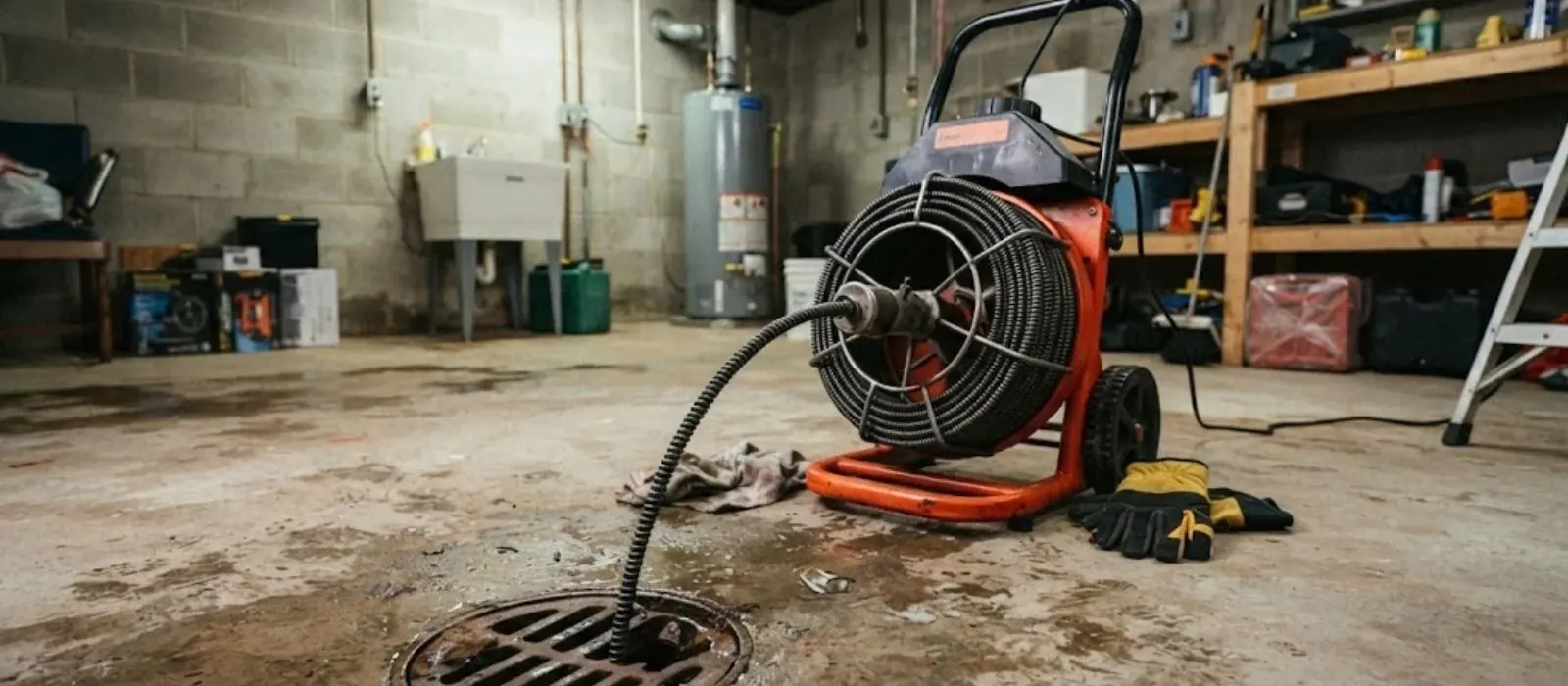
For a kitchen line that fills with grease, a cutting head on a cable machine scrapes the wall instead of poking a hole. For a main line with repeat backups, sewer line cleaning with a larger machine and a camera look shows the cause.
Between visits, scrape plates into the trash, wipe pans with a paper towel before washing and keep grease out of the sink. A strainer in the drain catches what a disposal cannot chew. Those habits do more to prevent a repeat than any liquid product.
About chemical drain openers
Avoid pouring chemical openers into a sink that is already standing full. The liquid sits in the trap, can splash back, and burns skin and eyes when the pipe is opened. For a standing sink, a trap cleaning or a call is safer. Mention what you poured if you call a plumber.
Drain design and the code
Kitchen drains and vents follow the Florida Building Code, Plumbing, which Florida builds on the International Plumbing Code (IPC), built on the IPC. A sink that drains slowly may be a clog, but vent or slope problems are also possible.
Opening up pipes behind a wall is a job for a licensed contractor.
Slow kitchen sink questions
A visible clog is often only the first layer. Grease can coat the trap and the pipe behind it, narrowing the line even after the strainer is clean.
It can be. Gurgling means air is being pulled through the trap, which happens with a partly blocked vent or a clog farther down the line.
The dishwasher drain empties into the same trap or disposal. If that line is partly blocked, the dishwasher output has nowhere to go and rises in the sink.
Yes. A jammed or clogged disposal slows the whole sink, and a missing knockout plug removal can cause dishwasher issues. Check the inlet and reset the unit.
Call when more than one fixture is slow, when water backs up from a floor drain or toilet, or when the trap is clean and the sink is still slow.
Possibly. Some Greenacres properties remain on septic until centralized service is available. Repeated slow drains across fixtures can point to the tank or drain field, so tell the plumber what system you have.