
Pick the unit before you pick up a wrench
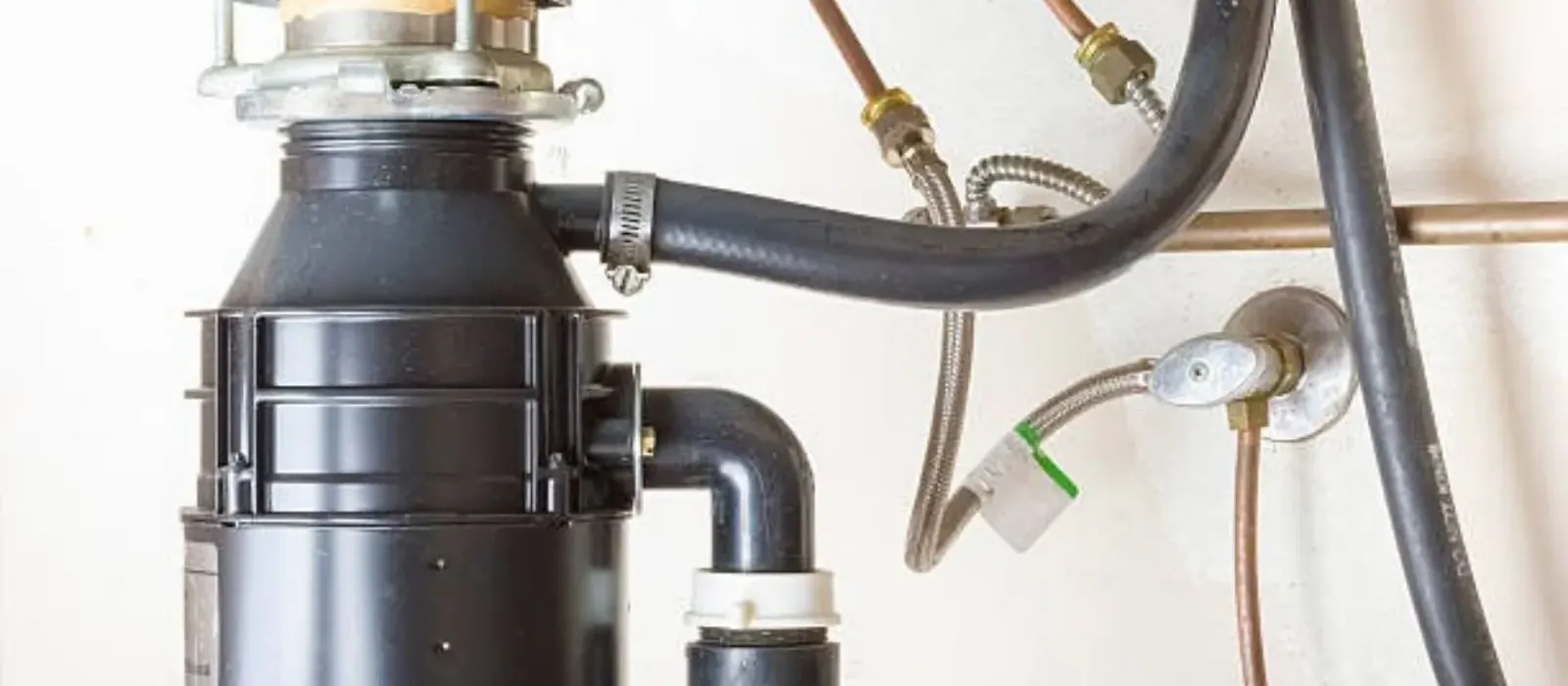
Whether the kitchen is in Wellington or Lantana, a garbage disposal is a small motor that spins a plate with two swivel lugs. The lugs push food against a ring until it is fine enough to pass through a screen in the housing. The two choices that matter are motor power and feed type. Everything else is fit and finish.
If your current unit is failing, try garbage disposal repair logic first: a hum without spin usually means a jam, and a reset button underneath often brings it back. If it leaks from the housing seams, replacement is the answer.
Horsepower and feed type, in plain terms
Retail lines run from roughly one third horsepower to one horsepower. More power grinds tougher scraps faster and tends to run more smoothly.
| Option | Fits best | Trade-off |
|---|---|---|
| Around 1/3 horsepower. | Single person or couple, light use. | Struggles with fibrous scraps and bones. |
| Around 1/2 to 3/4 horsepower. | Typical family kitchen. | Good balance of cost, noise and capacity. |
| Around 1 horsepower. | Heavy cooking, big households. | Larger body, more weight on the sink flange. |
| Continuous feed. | Run water, then drop scraps while it runs. | Hand near the opening, so it is a safety habit to build. |
| Batch feed. | A stopper starts the unit, so the opening is covered. | Slower, and the stopper is a part you can lose. |
Check the clearance under your sink before you buy. Tall units may not fit under a shallow base cabinet with a dishwasher drain loop and a trap arm.
How the install goes, start to finish
Shut off power and remove the old unit
Switch off the breaker, unplug or disconnect the wires, loosen the drain, then twist the old unit off its mounting ring. Support the weight, since a disposal can weigh over ten pounds.
Set the sink flange and mounting ring
Clean the sink opening, press a ring of plumber's putty under the new flange, and tighten the mounting assembly from below until the flange sits flush with no gaps.
Knock out the dishwasher plug
If a dishwasher drains into the disposal, a plug inside the inlet must be removed with a hammer and screwdriver. Fish the plug out so it does not clog the drain.
Hang, connect and test
Lift the unit onto the ring, rotate it to lock, attach the discharge elbow and the dishwasher hose, then run water and check each joint before restoring power.
Stuck on the wiring or a leaking joint?
That is the point to stop. Call us and we will tell you what we would check first.
Electrical: cord or hardwire
Some disposals ship with a power cord and plug into an outlet under the sink. Others are wired directly into a junction box on the unit. Which one you have depends on how the kitchen was wired when it was built, and the connection should match what is already there.
Cord installs are straightforward because the outlet and switch are already in place. Hardwired installs involve connecting wires inside a cover plate on the unit, and getting that wrong is a shock and fire risk. If you are not confident with household wiring, hire a licensed professional for that step.
Never run a disposal with the cover plate off or with wiring exposed under a damp sink. Water and bare conductors do not mix, and the area under a kitchen sink is exactly where a small leak can drip onto a connection.
Greenacres: sewer, septic and your disposal
The City of Greenacres long-range plan points to Palm Beach County Water Utilities (PBCWUD) and encourages converting wells and septic tanks to centralized service. Existing septic systems may remain until centralized service is available. So some Greenacres properties are on a sewer line and some are on septic.
That matters for a disposal. Food waste adds solids and grease to the system. On a septic property, a disposal can load the tank faster and push solids toward the drain field, so ask your septic service or the utility whether one is a good fit for your system. On centralized sewer, ask PBCWUD or the City whether any local rule applies.
If you are not sure which system your home uses, check your utility bill or call PBCWUD. We do not make that call for you, because it depends on the property.
DIY or hire it out
Reasonable to do yourself
- Replacing a cord-type unit with another cord-type unit.
- Swapping a drain gasket or discharge elbow.
- Clearing a jam with the hex key under the unit.
- Pressing the reset button after a jam.
Better left to a plumber
- Hardwired connections or a missing outlet.
- Cracked sink flange or a leaking sink basket.
- Changing from single to double bowl or moving the unit.
- A slow drain downstream of the disposal.
What not to grind, and why the drain downstream matters
Disposals handle soft scraps well. They do not handle grease, coffee grounds in volume, pasta and rice that swell, fibrous celery and corn husks, bones, or fruit pits. Those materials stick to the pipe wall or wrap around the drain line, not the disposal itself.
Run cold water for a full ten seconds after grinding so the waste moves past the trap and into the larger line. Hot water liquefies grease, which then cools and hardens farther down. Cold water keeps it solid so the unit can chop it.
If the sink backs up after you install a new disposal, the disposal is usually not the culprit. A partly blocked branch downstream is, and that is a job for drain cleaning with a cable machine.
Prep checklist before install day
Have these ready
- Disposal unit, mounting kit and the correct discharge elbow.
- Plumber's putty, a hammer, a screwdriver, pliers and a bucket.
- Power cord or wire nuts that match the unit, if applicable.
- A new dishwasher hose clamp if the old one is rusted.
- A flashlight and a towel for the cabinet floor.
- Photo of the old wiring before you disconnect it.
Installation and the code
A disposal's drain connection follows the Florida Building Code, Plumbing, which Florida builds on the International Plumbing Code (IPC), based on the IPC. The electrical side is a separate matter.
If you change the drain layout or add wiring, ask the City of Greenacres building department whether a permit applies.
Garbage disposal installation questions
A typical family kitchen is well served by a mid-range unit around one half to three quarters horsepower. Heavy cooking or a big household may justify more power.
Yes, if a dishwasher drains into the disposal. A plug in the inlet must be removed or the dishwasher will not drain, and the plug should be fished out of the unit.
Neither is better. Match what your kitchen already has. Hardwiring is the step most worth leaving to a licensed pro.
Some homes can, but food solids load a tank faster. Ask your septic service or the utility about your system before installing.
The most common causes are an under-tightened mounting ring, a missing gasket or a dishwasher hose that is loose. Dry every joint and watch it as water runs.
Ask PBCWUD or your septic provider whether your property is on septic or centralized sewer, and whether a disposal suits that system. We cannot see your tank from the sink.